1700s Historical Fiction-Written in My Own Heart’s Blood

1700s historical fiction - gabaldon

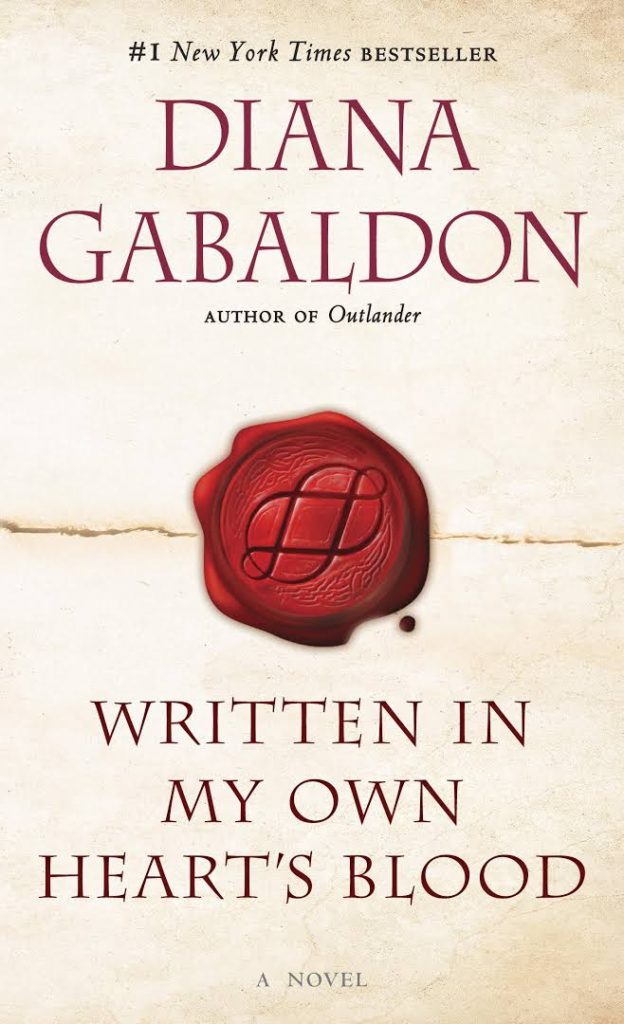
Written In My Own Heart’s Blood

By Diana Gabaldon


        I love historical fiction.  I love historical fiction about the American Revolution.  And I love historical fiction by Diana Gabaldon in her Outlander series.  But I somewhat reluctantly love this work of historical fiction that meets all three of the above criteria.  Let me tell you why.

Historical Fiction

        All of the novels of the Outlander series qualify as historical fiction.  But they have the unique addition of the characters’ ability to time travel through supernatural means.  Each traveler must figure out the limits and rules that apply to this ability.  This adds the hint of danger to each trip.  Gabaldon weaves a tangled web of interrelationships between the 1700’s and the 1900’s.  Willing and unwilling time travel through standing stones in the Scottish Highlands complicates many lives.

American Revolution

        In this eighth volume of the Outlander series, the author brings us further into the American Revolution.  Jamie and Claire have grown into middle age, together and apart.  Claire has been living in the British-occupied city of Philadelphia.  But that’s about to change with the king’s army hightailing it towards New York City.
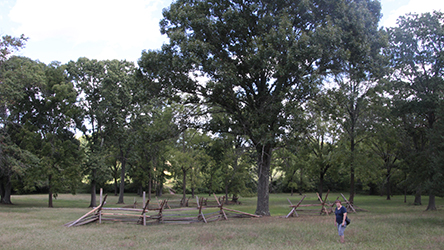
1700s historical fiction - monmouth battlefield

        Gabaldon has done her research well and presents the Battle of Monmouth in New Jersey pretty accurately.  I just visited that site last year, so I loved how well I could feel the heat and the ebb and flow of an important day in our nation’s history.  The one where Washington earned the love and respect of his troops.

Outlander Series

        Diana Gabaldon writes beautiful prose and tells absorbing stories.  She has sustained her Outlander books over many years and through many characters.  They face situations with grace, ingenuity, and craftiness (especially the villains).  I’ve followed them through the Jacobite risings in Scotland, witch burnings, French court intrigues, hangings, prisons, colonial life in the Appalachians, and now traveling with Washington’s army during the American Revolution.

        They never lack for plot.  But in this book, I felt that there were too many characters, with too many things going on.  Having been several years since I read the seventh book in the series, I found it difficult to pick up all the threads left hanging at the end of that one.  I had to keep reminding myself who they were and what their parts in the various plots were.

Two Instead of One?

        By the time I finished reading this novel, I thought it could easily have been two separate books.  Maybe it should have been.  Claire and Jamie, along with their relatives and friends in North America, had many plots and subplots.  They also had to make a lot of history.  Their daughter, Brianna, and her husband, Roger, faced their own trials and dangers in Scotland, both 18th and 20th centuries.

        But both groups existed in continuations of plots begun in the previous book.  Plots that I, at least in some cases, didn’t remember.  So I felt that Gabaldon should have spent a little more time encapsulating the loose ends.  This might have caused the need for two books instead of one.

        I still recommend this book to all who want to follow the further adventures of these marvelous characters.  But if reading it over, I might skip chapters and read the two plot lines separately till they come together again.  Juggling all the players at once was difficult for both the writer and the reader.

 

Lafayette in the Somewhat United States

Lafayette in the Somewhat United States

Lafayette in the Somewhat United States, by Sarah Vowell

Lafayette is the subject of Sarah Vowell’s newest work of non-fiction. She chose him for a number of reasons, but her choice was solidified by an incident during her initial research. Someone had inquired what her new project was to be, and when she said it was Lafayette, the person replied, “So you’ll be spending a lot of time in Louisiana.” Upon explaining, the person still didn’t seem to know who Lafayette was, and this reinforced the idea that it was time for him to be the subject of a best-selling book.

After reading Lafayette in the Somewhat United States, I had a similar reaction when I reported on this delightful book at a book club meeting. Members asked, “Is this a fictional person?” and “Who was Lafayette? I’ve never heard of him.” I was aghast just like Sarah Vowell, and proceeded to give them some background.

Who was Lafayette?

The life of Lafayette, who became the Marquis de Lafayette upon the death of his mother and grandfather when he was only twelve years old, is a tale of the political and military events of the late 18th and early 19th centuries in both France and America. Vowell begins with his 1824 thirteen month tour of the United States as last living general of the American Revolution. This illustrates how important to the United States Lafayette was, and how beloved by the populace, no matter their politics. Eighty thousand fans turned out to welcome his arrival in New York. The population was only 123,000 at that time. And huge crowds turned out all along his twenty-four state tour. He was the one thing all Americans could agree on.

Lafayette in our Revolution

In 1777, at the age of nineteen, this rich French aristocratic general left his young wife to come to America to aid in our fight to get rid of the British. His father had been killed in one of the many battles France fought with England in the Seven Years War. So hatred for England came to him at a young age, and his studies had reinforced the new democratic ideas. Once given a place within our Continental Army, Lafayette showed an eagerness to learn and natural ability. He became what Vowell calls a “chummy minion” to George Washington and was given a command of his own eventually.

During the war he wrote letters to people in France pleading for financial and military aid to the struggling country. Historically speaking, there might not have been a United States at the Revolution’s end without the assistance of the French. Washington and Lafayette were responsible for trapping Cornwallis in Yorktown, Virginia. But the French navy fleet was responsible for keeping them from escaping by sea.

Lafayette in his own country’s Revolution

Lafayette continued helping the United States in the 1780’s. We were in need of trading partners to replace those we lost when the British left our shores. He had returned to France by this time and had many powerful friends in government and commercial circles. While Thomas Jefferson was serving as minister to France, he and Lafayette became good friends and worked on trade agreements. Jefferson helped him when France began its journey towards democracy. Later, when the French Revolution turned on its own leaders with aristocratic connections, the U. S. helped Lafayette flee his own country. They later aided in saving his wife and family as well.

Lafayette’s return to America

Lafayette had fond memories of the successful revolution in America. Though a man of sixty-six by then, he agreed to the extended tour of the U.S. when invited by James Monroe. Throngs greeted him everywhere he went. They reminded him of the love he had for the United States, the country that he had helped found.

America returns the favor

France gave us the Centennial birthday gift of the Statue of Liberty, as a memorial to our alliance with them during the American War for Independence. And when the American Expeditionary Forces under General Pershing landed in France in World War I, they marched to Paris on July 4, 1917 and went directly to Lafayette’s tomb. They draped an American flag over his tomb, made a speech that spoke of our alliance with France, and finally said, “Lafayette, we are here.” Buried in a cemetery used as a mass grave during the Reign of Terror in the French Revolution, the dirt that covers his grave came from Bunker Hill.

Today, there is ceremony on the Fourth of July at Lafayette’s grave in Paris. Representatives from both the French and U. S. governments and militaries, along with his descendants, swap the American flag flying over his grave for a new one every year. At least some of us remember who he is.  Sarah Vowell, in her usual witty way, has ensured that more will remember him in the future.

Bears!

historically speaking bears

It’s all Teddy Roosevelt’s fault. Historically speaking, bears were considered to be fierce predators to be feared, hunted, and eaten. Tales of derring-do often included encounters with bears. Think Lewis and Clark, think Davy Crockett. But then Teddy Roosevelt came along.

One of the most fascinating Presidents America has ever had, Theodore Roosevelt loved to experience nature. He was an avid hunter, and in 1902, he was on a hunting trip in Mississippi when he was confronted with an interesting situation. After three days of hunting, Roosevelt had not spotted a bear, though others had. Some of the guides decided to help him out, and they tracked a bear with their dogs and managed to tie it to a tree. Wouldn’t you love to see a video of that process? They presented this bear to Roosevelt so that he would have the opportunity to shoot it. He refused to do so, calling it unsportsmanlike.

http://www.theodoreroosevelt.org/site/c.elKSIdOWIiJ8H/b.8684621/k.6632/Real_Teddy_Bear_Story.htm

The newspapers of the day seized on this story as great fodder for their cartoonists. Most of their cartoons showed the bear as a cub rather than the aged bear of reality. The cartoons inspired a shop owner to put two homemade stuffed toy bears in the window of his store, calling them Teddy’s bears, and thus began one of the first national toy fads. Everyone wanted one for their children.

Since that time, every generation has literally embraced teddy bears as their earliest beloved possessions. Including me. I have always loved and been interested in bears, from the time I had a teddy bear, to the first time I visited Yellowstone National Park at the age of seven, to all my visits to zoos, to all the nature documentaries I have watched. I lived in Yellowstone for one whole summer, and I know all the rules for safety in bear country. I know them and I believe them.

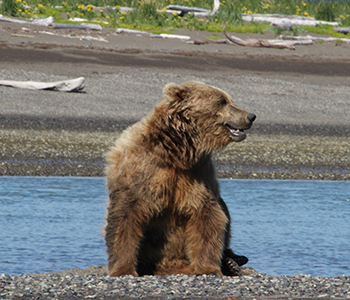
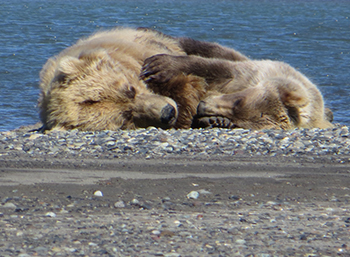
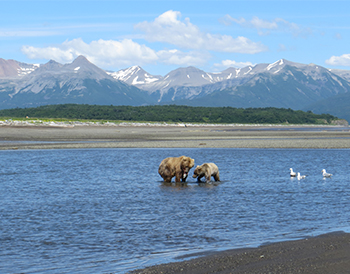
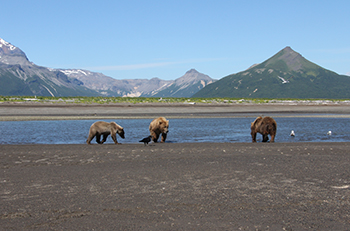
But there we were, my husband and I, with another couple and our pilot, lazing on a sandbar between the river and the sea, on a sunny summer day in Katmai National Park in Alaska. We had forded the river in our hip waders, and we were surrounded by breath-taking glacier-covered mountains. That would have been worth the trip, even if the grizzly bears hadn’t been watching us from their resting places on the sandbar. There was a female bear and her nearly grown cub resting nearest to our crossing point, and two other single bears sleeping in separate areas further out. Our pilot, who had flown us to this remote beach from Homer, Alaska, told us the bears would probably sleep till the tide was just right for fish to start running. We knelt just behind a rise to wait and watch.

The mother bear glanced at us in an offhand way. Seemingly, she went back to dozing while we huddled together about 75 yards away, clicking away with our cameras. The other two bears paid little attention to us and one of them eventually rose and waded into the water, studying it carefully. He made a sudden feint and lunged in, coming up with a fish in his jaws. He carried his catch onto the sand and devoured it. The seagulls were there before he finished and made noisy work of cleaning up.

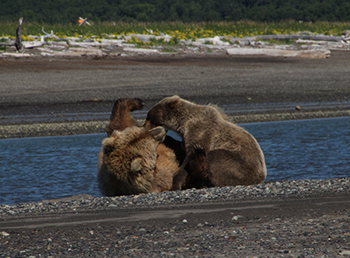
The pilot asked if we’d like to move to the top of a rise that was a bit closer. We all voted yes and crept forward. The mother bear turned her head and looked at us, but didn’t move otherwise. The other two adult bears started fishing more seriously and we watched them. The cub woke up, walked to its mother, and pestered her to nurse. She rolled over on her back and let it suckle until the cub was satisfied.

grizzly mom nursing cubThen they cuddled, nose to nose, paws around each other. What a sight to behold! We gazed in wonder from less than 50 yards away.

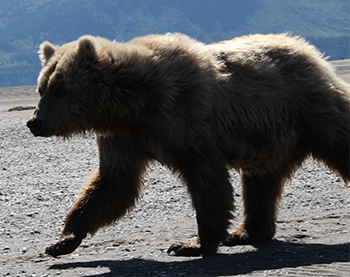
grizzly bear mom and cub cuddlingWe moved closer to the stream and downstream from the mother and cub. The mother bear got up and saw the other two bears fishing successfully, so she decided to try her luck. But she wanted to fish downstream, closer to where the others were catching fish. She looked at us and started walking our way. Our pilot spoke firmly, “Move along bear, just go on by,” and she walked past us, probably not more than ten yards away, with her cub following her.

grizzly bear passes byShe plunged into the river and caught a salmon in her jaws. Her cub wanted her to give it up, but she made it settle for the part it wrested from her by fighting for it. The cub returned to the shore and settled down to eat its portion. A raven vied for a share, and they made a game of it, the raven dancing in and out, the cub slapping a paw at the raven.

grizzly bear and cub fishingThen one of the two male bears decided he might be able to steal the cub’s food or maybe that he didn’t like the mother and cub fishing close to his place in the river, and he rushed across the stream towards the cub. The mother splashed her way in between the interloper and her cub and the two adults had a face off. She made clicking, popping noises with her jaw, almost like yawning with her mouth open. She continued until the other bear backed off and gave them a wide berth in the water.

grizzly bear stand offThe tide was moving in and the pilot told us we needed to go while we still had enough beach to take off in the small plane. We knew the day had to end, but we all felt blessed that we had been allowed to experience the wonders of this place. I wished a silent benediction to the mother bear and her cub for allowing us to be part of their day.