
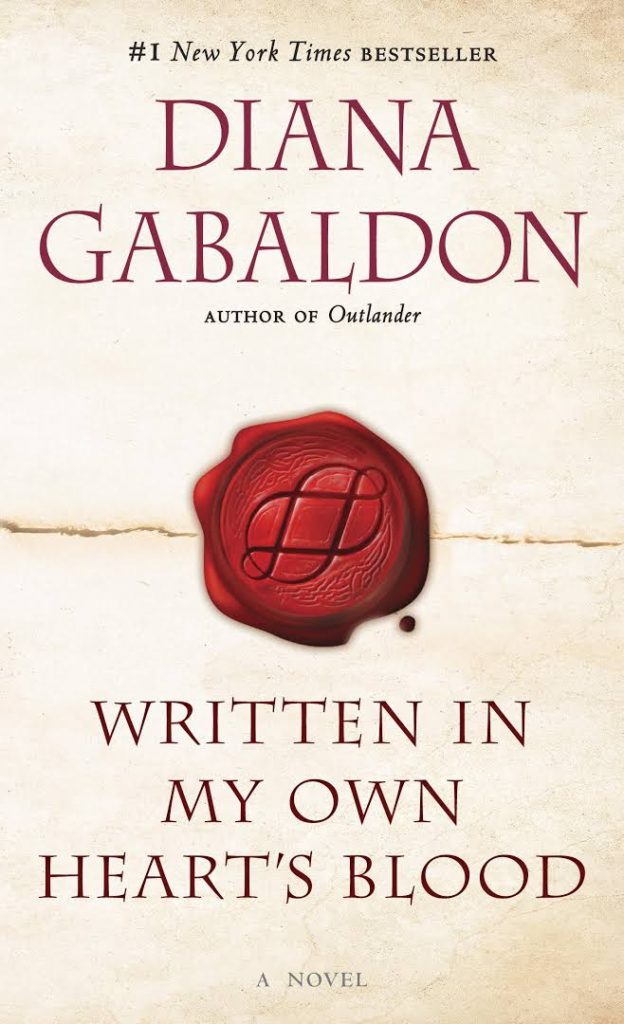
Written In My Own Heart’s Blood
By Diana Gabaldon
I love historical fiction. I love historical fiction about the American Revolution. And I love historical fiction by Diana Gabaldon in her Outlander series. But I somewhat reluctantly love this work of historical fiction that meets all three of the above criteria. Let me tell you why.
Historical Fiction
All of the novels of the Outlander series qualify as historical fiction. But they have the unique addition of the characters’ ability to time travel through supernatural means. Each traveler must figure out the limits and rules that apply to this ability. This adds the hint of danger to each trip. Gabaldon weaves a tangled web of interrelationships between the 1700’s and the 1900’s. Willing and unwilling time travel through standing stones in the Scottish Highlands complicates many lives.
American Revolution
In this eighth volume of the Outlander series, the author brings us further into the American Revolution. Jamie and Claire have grown into middle age, together and apart. Claire has been living in the British-occupied city of Philadelphia. But that’s about to change with the king’s army hightailing it towards New York City.
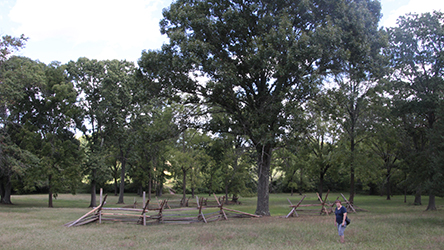
Gabaldon has done her research well and presents the Battle of Monmouth in New Jersey pretty accurately. I just visited that site last year, so I loved how well I could feel the heat and the ebb and flow of an important day in our nation’s history. The one where Washington earned the love and respect of his troops.
Outlander Series
Diana Gabaldon writes beautiful prose and tells absorbing stories. She has sustained her Outlander books over many years and through many characters. They face situations with grace, ingenuity, and craftiness (especially the villains). I’ve followed them through the Jacobite risings in Scotland, witch burnings, French court intrigues, hangings, prisons, colonial life in the Appalachians, and now traveling with Washington’s army during the American Revolution.
They never lack for plot. But in this book, I felt that there were too many characters, with too many things going on. Having been several years since I read the seventh book in the series, I found it difficult to pick up all the threads left hanging at the end of that one. I had to keep reminding myself who they were and what their parts in the various plots were.
Two Instead of One?
By the time I finished reading this novel, I thought it could easily have been two separate books. Maybe it should have been. Claire and Jamie, along with their relatives and friends in North America, had many plots and subplots. They also had to make a lot of history. Their daughter, Brianna, and her husband, Roger, faced their own trials and dangers in Scotland, both 18th and 20th centuries.
But both groups existed in continuations of plots begun in the previous book. Plots that I, at least in some cases, didn’t remember. So I felt that Gabaldon should have spent a little more time encapsulating the loose ends. This might have caused the need for two books instead of one.
I still recommend this book to all who want to follow the further adventures of these marvelous characters. But if reading it over, I might skip chapters and read the two plot lines separately till they come together again. Juggling all the players at once was difficult for both the writer and the reader.