Favorite 1900s Historical Fiction – Montana 1948 – Larry Watson –

Montana 1948

by Larry Watson
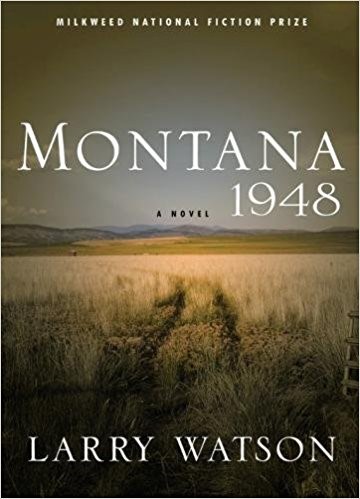
Montana 1948 - 1900s historical fiction


       Historical fiction brings a sense of time and place to its readers.  Good historical fiction also offers insight into the people living in that time and place, and their similarities to us.  I found Montana 1948 to be a great work of 1900s historical fiction.

        Larry Watson crafts this compact story of events in a twelve-year-old boy’s life without a single spare word.  He evokes a picture of life in a small town in Montana following World War II.  People ride horses into town, but most inhabitants drive pickups.  Some mothers stay at home, but some work at jobs around town.  Sioux citizens struggle against prejudice and dismissal, except when they compete exceptionally in sports.

The Adults

        The story in this 1900s historical fiction focuses on the relationships between the adults in his life and how they have evolved.  His father, the County Sheriff, dislikes his job and wishes he could be the lawyer he was trained to be, as does his wife.  But David’s grandfather has retired from the sheriff job and has bequeathed it to his son.  He expects his son to hold the position off and on for the rest of his life.

        David’s uncle has been a golden boy all his life – a great athlete, a war hero, his father’s favorite, and now a doctor in the small town.  But there are stories about him among the Sioux.

        Marie Little Soldier, the family’s housekeeper, has taken care of David since he was quite young.  Then Marie catches pneumonia and dies, which sets into motion a series of events that change all of them forever.

The Dilemma

        Young David loves his parents, grandparents, uncle and aunt, and his Sioux caregiver.  But the adults act in ways that make him reassess them as individuals.  He questions their actions, reactions, and inactions, and tries to figure out his own place in the events that swirl around Marie Little Soldier.  Adulthood claims him.

        I loved this book – so readable and so relatable!  We all know people who only find their courage when hard-pressed.  Some people, despite all the advantages they’ve always received, have used their positions for ill purposes.  In America (and in most places), some groups of people have been mistreated and have to fight for every good thing in their lives.  And all of us have been young folks who have to learn these truths for the first time.


5/5 stars
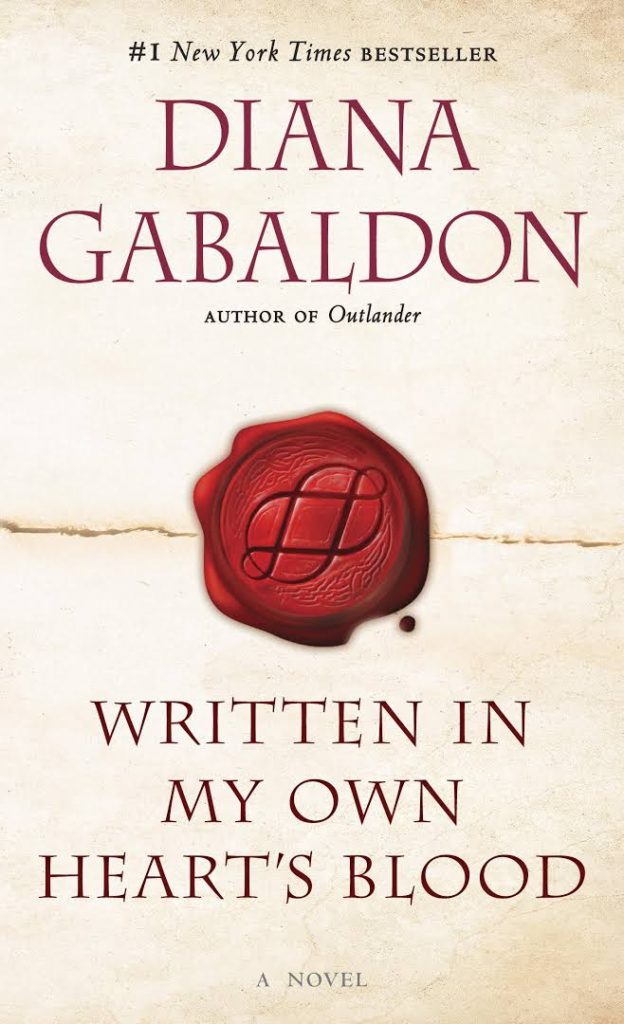
 

1700s Historical Fiction-Written in My Own Heart’s Blood

1700s historical fiction - gabaldon

Written In My Own Heart’s Blood

By Diana Gabaldon


        I love historical fiction.  I love historical fiction about the American Revolution.  And I love historical fiction by Diana Gabaldon in her Outlander series.  But I somewhat reluctantly love this work of historical fiction that meets all three of the above criteria.  Let me tell you why.

Historical Fiction

        All of the novels of the Outlander series qualify as historical fiction.  But they have the unique addition of the characters’ ability to time travel through supernatural means.  Each traveler must figure out the limits and rules that apply to this ability.  This adds the hint of danger to each trip.  Gabaldon weaves a tangled web of interrelationships between the 1700’s and the 1900’s.  Willing and unwilling time travel through standing stones in the Scottish Highlands complicates many lives.

American Revolution

        In this eighth volume of the Outlander series, the author brings us further into the American Revolution.  Jamie and Claire have grown into middle age, together and apart.  Claire has been living in the British-occupied city of Philadelphia.  But that’s about to change with the king’s army hightailing it towards New York City.

1700s historical fiction - monmouth battlefield

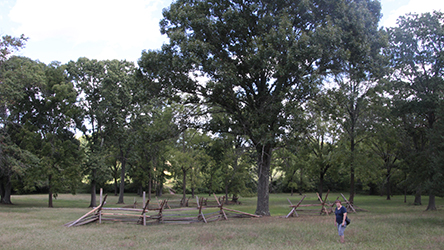
        Gabaldon has done her research well and presents the Battle of Monmouth in New Jersey pretty accurately.  I just visited that site last year, so I loved how well I could feel the heat and the ebb and flow of an important day in our nation’s history.  The one where Washington earned the love and respect of his troops.

Outlander Series

        Diana Gabaldon writes beautiful prose and tells absorbing stories.  She has sustained her Outlander books over many years and through many characters.  They face situations with grace, ingenuity, and craftiness (especially the villains).  I’ve followed them through the Jacobite risings in Scotland, witch burnings, French court intrigues, hangings, prisons, colonial life in the Appalachians, and now traveling with Washington’s army during the American Revolution.

        They never lack for plot.  But in this book, I felt that there were too many characters, with too many things going on.  Having been several years since I read the seventh book in the series, I found it difficult to pick up all the threads left hanging at the end of that one.  I had to keep reminding myself who they were and what their parts in the various plots were.

Two Instead of One?

        By the time I finished reading this novel, I thought it could easily have been two separate books.  Maybe it should have been.  Claire and Jamie, along with their relatives and friends in North America, had many plots and subplots.  They also had to make a lot of history.  Their daughter, Brianna, and her husband, Roger, faced their own trials and dangers in Scotland, both 18th and 20th centuries.

        But both groups existed in continuations of plots begun in the previous book.  Plots that I, at least in some cases, didn’t remember.  So I felt that Gabaldon should have spent a little more time encapsulating the loose ends.  This might have caused the need for two books instead of one.

        I still recommend this book to all who want to follow the further adventures of these marvelous characters.  But if reading it over, I might skip chapters and read the two plot lines separately till they come together again.  Juggling all the players at once was difficult for both the writer and the reader.


BCE Historical Fiction – Love Amid the Ashes

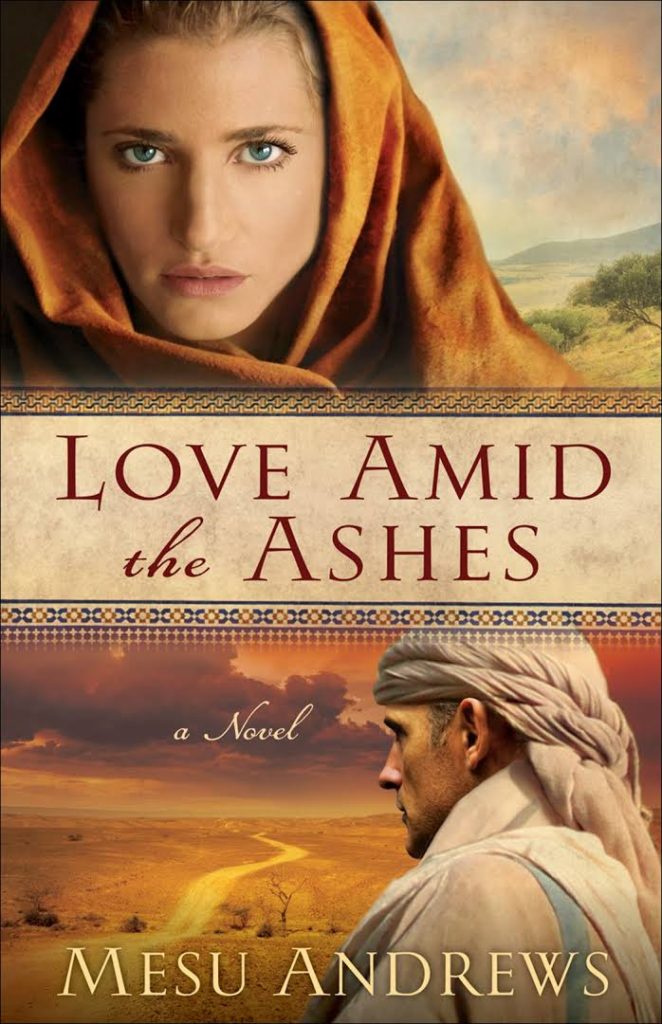
BCE historical fiction - love amid the ashes


Love Amid the Ashes

By Mesu Andrews


BCE Historical Fiction – Job and Dinah?

         This BCE historical fiction tells the Biblical story of Job by combining his tale with that of Dinah from Genesis.  The author researched and found a somewhat obscure apocryphal source proposing a relationship between Job and Jacob’s daughter as well as a relationship between Esau and Job.  Andrews cited her sources, but I’m not sure that I was convinced.  But this is a work of fiction, so poetic license probably covers such an ancient time period!

 Tough times for women

        On the surface this book moved along in its narrative without a lot of bumps. Dinah hasn’t had an easy life since her rape experience.  Her relatives all blame her for the revenge she caused them to take.  They treat her like damaged goods and are glad to get rid of her when the chance appears.  Dinah finds a new life when Jacob sends her away to be wed to one of Job’s children.

        When she arrives at Job’s residence, things happen quickly.  Her intended groom dies before she has the chance to meet him.  Because she is a trained healer, Dinah helps Job with the physical suffering he endures.  He gives her the spiritual sustenance that she needs.

I didn’t know whether to laugh or cry

        Several things bothered me as I read this novel.  The author inserts tears into almost every scene.  And not just in scenes where God reveals new sufferings for Job.  It got so irritating that I groaned each time any character showed tears, which was a lot.  It also became tedious that all the women “giggled” all the time.  They rarely laughed or chuckled or snickered or chortled.  Just giggled, sometimes in the same scene with tears.

        Another thing that I didn’t like about this book was its tendency to name drop.  The author wove the two characters’ stories together, but it felt forced when they all ended up in Egypt with Joseph.

        I have read a lot better Biblical historical fiction – novels that dove deeper into character, motive, plot, and theology.  This one was just a little too simplistic.


2/5 Stars

Historical Nonfiction – The Blood of Avalon – King Arthur –

The Blood of Avalon – The Secret History of the Grail Dynasty from King Arthur to Prince William By Adrian Gilbert –   Adrian Gilbert believes that he can trace the ancestry of England’s Prince William back to King Arthur … Continue reading